The Auckland City Council has recently hired a Security Firm for $20,000 to move homeless people on from the central city area during the Rugby World Cup. Palmerston North City Council was reported moving to rid it's street of beggars before the same event. Evidently New Zealand now exists for some people, but not others. To my mind these actions speak of the widening gulf that exists in our society between the haves and the have-nots.
Every local territorial authority has bylaws relating to the use by citizens of public places within their area. The citizens of Auckland and Palmerston North, like all cities comprise a diverse mix of people and types. Some of their citizens are also homeless.
Like most large cities of the English speaking world, vagrants and their associated social problems, including alcoholism, have been a regular feature during the development of modern society. Until recently, their public presence has been fairly unproblematic, with the police tending to use informal measures to deal with them, preferring to ask them to ‘move on’ rather than invoke formal procedures of arrest, prosecution and so on where they had done nothing other than have a public presence. Earlier research found that the police tended to adopt a ‘peacekeeping’ rather than law enforcement approach to such people. As Bittner (1967: 714) put the matter, ‘peace keeping procedure on skid-row consists of three elements. Patrolmen seek to acquire a rich body of concrete knowledge about people by cultivating personal acquaintance with as many residents as possible. They tend to proceed against persons mainly on the basis of perceived risk, rather than on the basis of culpability. And they are more interested in reducing the aggregate total of troubles in the area than in evaluating individual cases according to merit.’
The way in most cases to reduce the ‘total of troubles in the area’ was to ask their skid-row customers to periodically move on, pushing any risks they posed out of sight. Arrest followed by prosecution might simply add to the ‘total of troubles’, solving nothing, wasting valuable police time and resources in a process that became, as it were, a ‘revolving door’ for all concerned: ‘drunks were a drain on resources which could be used more productively.'
Added to this now is the desire to 'put on a good face' for the global audience watching the Rugby World Cup. There is after all, no poverty in New Zealand? Hence as with India and the Commonwealth Games we are to be treated to local councils pursuing policies of ‘reupholstering’ urban domains, particularly city centres (and frequently gentrifying the former skid-row locations), with a view to ensuring that, as was the case in Wellington, ‘the city must be walkable, clean and safe, with people living, working and spending leisure time in the city’ (Statement of Proposal, Liquor Control Bylaw: 2).
We will see Police enforcing certain bylaws, such that Courts will become conduits for, some of the homeless community who will always be appearing, either in relation to a breach of liquor ban or some other minor public order type of charge during the Rugby World Cup as a result of theses purging sweeps.
As a lawyer who regularly appears in Court on behalf of clients I have begun to question whether the courts of criminal justice are the appropriate forums to address the issues around street people.
General Principles
The Local Government Act 2002 makes it a requirement that all bylaws have to comply with the BORA. In this sense a limit on a fundamental right will only be upheld if it survives section 5 BORA scrutiny. To qualify as a justified limitation, any inroad into a BORA right must be (a) prescribed by law and (b) reasonable and demonstrably justified in a free and democratic society. Once a prima facie BORA infringement has been identified it is up to the local body promoting the infringement to prove that the section 5 requirements are met.
BORA rights are rights not privileges to be granted by officials. A right may be regulated, but only in ways authorised and in accord with section 5 BORA described above. There is the further requirement that any restriction on a BORA right only restrict that right to the least degree possible consistent with the demonstrably justified limitation being pursued.
Section 6 - Interpretation consistent with the New Zealand Bill of Rights Act 1990 (“BORA”)
Recent judicial pronouncements demonstrate that the courts are utilising the direction in Section 6 of the Bill of Rights Act to accord preference to meanings of enactments that are consistent with the rights and freedoms contained in the Act. In Baigent’s Case for example, the Court of Appeal applied Section 6 in conjunction with sections 3 and 21 of the Bill of Rights Act when interpreting Section 6(5) of the Crown Proceedings Act 1950 determining whether proceedings could be brought against the Crown for a search in bad faith by the police. The Court concluded that “[i]t is consistent with that affirmed right [right to be secure against unreasonable search and seizure] to interpret s 6(5) of the Crown Proceedings Act as not protecting the Crown from liability for the execution of a search warrant in bad faith” (Baigent’s Case [1994] 3 NZLR 667, 674 per Cooke P (as he then was)).
In Moonen v Film and Literature Board of Review (1999) 5 HRNZ 224, 234 the Court of Appeal stated that “where an enactment can be given a meaning that is consistent with the rights and freedoms contained in the Bill of Rights, that meaning shall be preferred to any other. Thus if there are two tenable meanings, the one which is most in harmony with the Bill of Rights must be adopted” (Moonen para [16]). When considering the meaning of the words “promotes or supports” in Section 3 of the Films, Videos, and Publications Classification Act 1993 the Court emphasised that a Bill of Rights consistent approach was required and that those words had to be given such available meaning which impinges as little as possible on freedom of expression.
The Court of Appeal went a step further in the recent decision of R v Poumako [2000] 2 NZLR 695, 702:
The meaning to be preferred is that which is consistent (or more consistent) with the rights and freedoms in the Bill of Rights. It is not a matter of what the legislature (or an individual member) might have intended. The direction is that whenever a meaning consistent with the Bill of Rights can be given, it is to be preferred.
While remaining within the appropriate realm of statutory interpretation, the courts continue to ensure a level of protection for human rights in New Zealand similar in large measure to that achieved in jurisdictions where a Bill of Rights or its equivalent has the status of superior law.
Compliance with the Bill of Rights Act
The legislation passed by a local body authority is subordinate legislation. Whereas Parliament is able to pass legislation despite a report from the Attorney General under Section 7 of the BORA indicating a conflict with BORA. Local bodies do not enjoy this power, Parliament has expressly stated that this is so in section 155 of the Local Government Act 2002.
Section 5 of the BORA provides that the rights and freedoms contained in the Act may be subject only to such reasonable limits prescribed by law as can be demonstrably justified in a free and democratic society. In determining whether a limitation is “demonstrably justified”, the Court of Appeal in its above mentioned Moonen decision set out the test to determine whether or not a limitation is “demonstrably justified” (Moonen para [18]):
(i) Identify objective that the Legislature was endeavouring to achieve by the provision in question.
(ii) Assess the importance and significance of that objective.
(iii) The way in which the objective is statutorily achieved must be in reasonable proportion to the importance of the objective.
(iv) The means used must also have a rational relationship with the objective.
(v) In achieving the objective there must be as little interference as possible with the right or freedom affected.
(vi) The limitation involved must be justifiable in light of the objective.
The Legal Issues Re Freedom of Expression
Forcing people to move on, from a public space, because they have no private space of their own, or because they ask for alms is to my mind offensive and is a blatant fetter on a person’s section 14 BORA right to freedom of expression.
Begging and the Right to Freedom of Expression
Pursuant to section 14 BORA all persons have the right to freedom of expression, including the right to seek, receive and impart information through any media, including orally, in writing or in the form of art.
As a first principle I consider that the proposed proscription and criminalisation of begging to constitute an infraction of the fundamental human right to freedom of expression.
Such restrictions would violate the right to freedom of expression in two basic respects. First, the proscription of begging renders peaceful verbal or written communication unlawful. Anti-begging provisions apply whether a person adopts passive begging techniques (such as sitting or standing in one spot with a cup, a hat or a sign) or more active begging techniques (such as approaching passers-by and entreating them to donate money). In each case, it is the act of expressing a need for money, rather than the conduct associated with that expression, that is the target of anti-begging provisions.
Second, anti-begging provisions infringe the right to freedom of expression in that they proscribe the imparting (and, by extension, the receiving) of communications regarding the way in which society treats its poor and disenfranchised. In many cases, begging amounts to an expression of poverty, alienation, homelessness, dislocation and the effects of inadequate social security, public housing and public health systems. In the US, many anti-begging provisions have been struck down or narrowed on the basis of inconsistency with the First Amendment right to freedom of expression: see, eg, Benefit v Cambridge, 424 Mass 918 (1997) per Greaney J:
"We conclude that no compelling State interest has been demonstrated that would warrant punishing a beggar's peaceful communication with his or her fellow citizens in a public place. (6) As one writer on the subject has observed: "At the least, for some panhandlers, begging is a way to augment their meager sources. For a few, it may be their only source of income. Panhandling is therefore close to the center of the personal liberty of some people in contemporary American society." Munzer, Response to Ellickson on "Chronic Misconduct" in Urban Spaces: Of Panhandlers, Bench Squatters, and Day Laborers, 32 Harv. C.R.-C.L. L. Rev. 1, 11 (1997). The statute intrudes not only on the right of free communication, but it also implicates and suppresses an even broader right -- the right to engage fellow human beings with the hope of receiving aid and compassion. The streets and public areas are quintessential public forums, not because they are a particularly convenient platform for expression, but because they are the necessary, essential public spaces that connect our individual private spaces, from which we legitimately may exclude others and likewise be excluded, but from which we almost all must inevitably emerge from time to time. If such a basic transaction as peacefully requesting or giving casual help to the needy may be forbidden in all such places, then we may belong to the government that regulates us and not the other way around."
The criminalisation of begging denies to persons who beg a form of expression that may be necessary for survival. It also denies the truly poor the right to impart, and society the right to receive, information regarding poverty, inequality, structural inadequacies and the need for urgent social reform. By silencing people who beg, anti-begging provisions stifle debate about social policies regarding the poor.
Saturday, 30 July 2011


Sunday, 24 July 2011
CAPITAL GAINS TAX – AN OPPORTUNITY FOR A FAIRER SYSTEM
John Key has this vein that runs along his forehead and every time someone talks about Capital Gains Tax it bulges. For some strange reason he is opposed to everyone paying their fair share, and it puzzles me. Virtually every other developed nation has a form of Capital Gains Tax, the name might vary and the amount people pay might fluctuate but as a tax it is fair and equitable.
So why is Mr Key so opposed to it and why is the National/ACT government currently jumping up and down, spreading myth and rumour saying it will be the end of the world? Well it is simple it is their rich friends that will be affected and not the average man/woman on the street.
Respected economist Gareth Morgan has acknowledged that a capital gains tax makes sense. As Morgan states: “Our redistribution regime is broken, it cannot be rectified with still more patches to a rotten core. We have a chronic misallocation of capital. Investment in capital here has very little to do with the taxable income generated, in some cases it is inversely proportional, people with the greatest means to pay tax are commonly asset-rich and deliberately income-poor. The time for a tax on capital is overdue.”
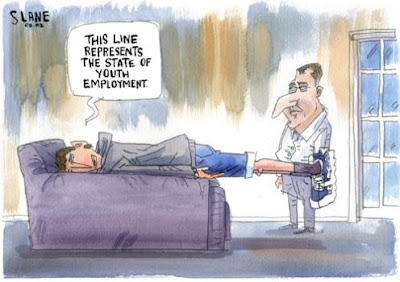
The first thing is that it is a matter of fairness. If I go out and work hard all year for the average fulltime wage, I get $48,000 a year gross and pay $8,400 tax. If I have a business and it makes $48,000 profit in a year, it pays $13,400 tax. If my only income is interest and dividends and I get $48,000 a year I pay $7,400. If I have some investment properties and their capital value appreciates by $48,000 in a year and I sell up, I pay no tax.
Now lets not forget that it is tax on the capital gain that you pay the tax on, not the full sale price of the property. Let’s look at a possible scenario. You buy a property for $200,000 you then do it up which costs you $20,000 you then sell it for $300,000. So to work out the capital gain you need to look at the investment of $220,000 and the $80,000 you make when you sell it. So it will be 15% of the $80,000 that is taxed. So $12,000 paid in tax and you make $68,000 after tax on your original investment.
Now lets compare it to someone who is a wage or salary earner on $80,000. That person would have paid just under $20,000 in tax or 20% of their income. So even with a Capital Gains Tax the property investor would still be better off than the wage earner paying PAYE by $8,000.
The absence of a Capital Gains Tax has created huge distortions in our economy. These distortions are hugely damaging to our economy. Because we have taxed income but not capital, investors are massively motivated to put their money into assets they hope will grow in value rather than those that produce income. Hence we have seen massive growth in unproductive property investment, which has made owning your own home unaffordable for a large number of young people starting out.
Just as important though is the negative impact that not having a capital gains tax has on the productive economy. Dairy farming is a good example. Most farmers take on massive debt to purchase land. Farmers work extremely hard, take minimal income out of the business and try and pay off the debt as quickly as possible. At the end many hope for the big tax-free payoff when they sell up.
Financial commentator Rod Oram states that the result of this has been that the dairy sector has quadrupled its debt to $43 billion in the decade before the current recession. This led to skyrocketing land prices that were uneconomic when compared with competing farms overseas. Good US pastoral land for example is one-quarter of the price here. This growth in New Zealand pastoral land prices added little to industry performance.
Essentially a number of farmers now farm for capital gains. The result is that ownership patterns are changing with young farmers gradually being priced out of the market with a growing number of farms now being foreign owned.
Capital Gains Tax is a great way of levelling the playing field. It gets the people at the top to pay their fair share. Labour is advancing a tax policy that most economists, the Reserve Bank, and the Government’s own Tax Working Group endorse. It is not novel New Zealand will just be coming into line with the rest of the world. Very few countries don't have Capital Gains Tax and most of them are tax havens such as, Belize, Cayman Islands and Isle of Man.
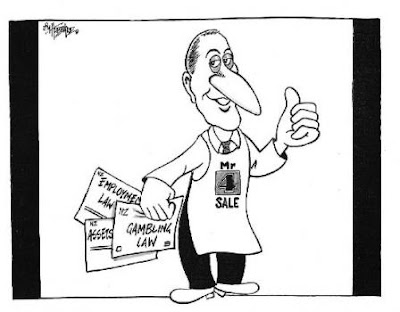
At 15% New Zealand will remain competitive against most other countries, over a period of time it will realise a regular income of a couple of billion dollars a year and this can be invested back into public services, removing GST from fruit and vegetables and finally developing a tax system that is fairer and will provide an income stream for the government that will enable it to significantly reduce foreign debt without selling our income generating assets.
So why is Mr Key so opposed to it and why is the National/ACT government currently jumping up and down, spreading myth and rumour saying it will be the end of the world? Well it is simple it is their rich friends that will be affected and not the average man/woman on the street.
Respected economist Gareth Morgan has acknowledged that a capital gains tax makes sense. As Morgan states: “Our redistribution regime is broken, it cannot be rectified with still more patches to a rotten core. We have a chronic misallocation of capital. Investment in capital here has very little to do with the taxable income generated, in some cases it is inversely proportional, people with the greatest means to pay tax are commonly asset-rich and deliberately income-poor. The time for a tax on capital is overdue.”

The first thing is that it is a matter of fairness. If I go out and work hard all year for the average fulltime wage, I get $48,000 a year gross and pay $8,400 tax. If I have a business and it makes $48,000 profit in a year, it pays $13,400 tax. If my only income is interest and dividends and I get $48,000 a year I pay $7,400. If I have some investment properties and their capital value appreciates by $48,000 in a year and I sell up, I pay no tax.
Now lets not forget that it is tax on the capital gain that you pay the tax on, not the full sale price of the property. Let’s look at a possible scenario. You buy a property for $200,000 you then do it up which costs you $20,000 you then sell it for $300,000. So to work out the capital gain you need to look at the investment of $220,000 and the $80,000 you make when you sell it. So it will be 15% of the $80,000 that is taxed. So $12,000 paid in tax and you make $68,000 after tax on your original investment.
Now lets compare it to someone who is a wage or salary earner on $80,000. That person would have paid just under $20,000 in tax or 20% of their income. So even with a Capital Gains Tax the property investor would still be better off than the wage earner paying PAYE by $8,000.
The absence of a Capital Gains Tax has created huge distortions in our economy. These distortions are hugely damaging to our economy. Because we have taxed income but not capital, investors are massively motivated to put their money into assets they hope will grow in value rather than those that produce income. Hence we have seen massive growth in unproductive property investment, which has made owning your own home unaffordable for a large number of young people starting out.
Just as important though is the negative impact that not having a capital gains tax has on the productive economy. Dairy farming is a good example. Most farmers take on massive debt to purchase land. Farmers work extremely hard, take minimal income out of the business and try and pay off the debt as quickly as possible. At the end many hope for the big tax-free payoff when they sell up.
Financial commentator Rod Oram states that the result of this has been that the dairy sector has quadrupled its debt to $43 billion in the decade before the current recession. This led to skyrocketing land prices that were uneconomic when compared with competing farms overseas. Good US pastoral land for example is one-quarter of the price here. This growth in New Zealand pastoral land prices added little to industry performance.
Essentially a number of farmers now farm for capital gains. The result is that ownership patterns are changing with young farmers gradually being priced out of the market with a growing number of farms now being foreign owned.
Capital Gains Tax is a great way of levelling the playing field. It gets the people at the top to pay their fair share. Labour is advancing a tax policy that most economists, the Reserve Bank, and the Government’s own Tax Working Group endorse. It is not novel New Zealand will just be coming into line with the rest of the world. Very few countries don't have Capital Gains Tax and most of them are tax havens such as, Belize, Cayman Islands and Isle of Man.
At 15% New Zealand will remain competitive against most other countries, over a period of time it will realise a regular income of a couple of billion dollars a year and this can be invested back into public services, removing GST from fruit and vegetables and finally developing a tax system that is fairer and will provide an income stream for the government that will enable it to significantly reduce foreign debt without selling our income generating assets.
Friday, 1 July 2011
A Vote for Asset Sales is a Vote for Higher Power Prices
The Electricity Authority is currently running a campaign on TV called “What’s My Number”, to encourage people to check out how their power company stacks up against the other power companies. I looked at the website www.whatsmynumber.org.nz and www.powerswitch.org.nz where you can see how much you could save by switching power companies.
I found graphs showing what the various power companies have been charging in different parts of the country over the last few years, and some of the latest price rises are huge.
It looked to me as though the Government-owned companies like Genesis and Meridian often charge less than the larger private companies. I wondered if this applied in the Wairarapa, so I got local power prices from the Ministry of Economic Development’s website and put the data in the following chart;

To make the chart simpler I have left out some of the smaller companies, but the chart still covers over 90% of the local electricity market. All of the companies have increased prices substantially, and more increases are expected as demand grows and we move towards more environmentally friendly sources of power. (Note that the chart shows what it would cost to use 8000 kWh of electricity in a year, including line charges, GST and prompt payment discounts but not other discounts or rebates).
The pattern I have spotted of the Government-owned retailers charging less than the large private companies, seems to happen all over the country. In fact, it looks as though the two companies which have the highest prices are also the ones which are listed on the share market, i.e. Contact and Trustpower. A sharemarket listing is what is planned for Genesis, Meridian and Mighty River Power (the state owned power companies the government wants to start selling off).
I have talked about the risks around the Government’s asset sales strategy before, and how the major debt problem is private NOT government debt, but you probably thought, “Oh well the economy’s in the s#it, we’ve got too much debt and have to pay for the Christchurch earthquakes, so it‘s fair enough for the Government to sell down some of its assets”. This is odd because, selling state assets won’t reduce private debt.
What is also not realized is what if a vote for asset sales is a vote for higher power prices?
As far as I can tell, the private companies appear to have more aggressive pricing strategies than the Government owned retailers, and in a commercial world, it makes sense. They can hike prices & risk losing a few customers, because the extra profit from raising prices across their whole customer base is so big that it offsets the losses.
The Government has assured us that the State Owned Enterprises (SOE’s) being sold down will benefit from being run more commercially. Presumably this means that their new, more commercial Boards of Directors will seek to maximize the return from these businesses. In fact their new shareholders will demand it.
My worry is that this process will inevitably lead to higher power prices as this is the easiest way to boost returns. The “Mum & Dad” investors National hopes will buy some of the shares might benefit, but the rest of us will get it in the neck.
In my book the price charts show us that by owning the power companies, the Government has actually been keeping a lid on the cost of electricity for all of us, the same way Kiwibank has been keeping the Aussie banks honest. I reckon running these companies “more commercially” won’t be in our best interest long term.
Please folks, think carefully before you give National the go ahead on asset sales. Not only will you be voting to sell what you already own for no effect on private debt, it will cost you a lot more in your back pocket in the long run.
Your views are important to me, email me at: michael@wairarapalabour.org
I found graphs showing what the various power companies have been charging in different parts of the country over the last few years, and some of the latest price rises are huge.
It looked to me as though the Government-owned companies like Genesis and Meridian often charge less than the larger private companies. I wondered if this applied in the Wairarapa, so I got local power prices from the Ministry of Economic Development’s website and put the data in the following chart;

To make the chart simpler I have left out some of the smaller companies, but the chart still covers over 90% of the local electricity market. All of the companies have increased prices substantially, and more increases are expected as demand grows and we move towards more environmentally friendly sources of power. (Note that the chart shows what it would cost to use 8000 kWh of electricity in a year, including line charges, GST and prompt payment discounts but not other discounts or rebates).
The pattern I have spotted of the Government-owned retailers charging less than the large private companies, seems to happen all over the country. In fact, it looks as though the two companies which have the highest prices are also the ones which are listed on the share market, i.e. Contact and Trustpower. A sharemarket listing is what is planned for Genesis, Meridian and Mighty River Power (the state owned power companies the government wants to start selling off).
I have talked about the risks around the Government’s asset sales strategy before, and how the major debt problem is private NOT government debt, but you probably thought, “Oh well the economy’s in the s#it, we’ve got too much debt and have to pay for the Christchurch earthquakes, so it‘s fair enough for the Government to sell down some of its assets”. This is odd because, selling state assets won’t reduce private debt.
What is also not realized is what if a vote for asset sales is a vote for higher power prices?
As far as I can tell, the private companies appear to have more aggressive pricing strategies than the Government owned retailers, and in a commercial world, it makes sense. They can hike prices & risk losing a few customers, because the extra profit from raising prices across their whole customer base is so big that it offsets the losses.
The Government has assured us that the State Owned Enterprises (SOE’s) being sold down will benefit from being run more commercially. Presumably this means that their new, more commercial Boards of Directors will seek to maximize the return from these businesses. In fact their new shareholders will demand it.
My worry is that this process will inevitably lead to higher power prices as this is the easiest way to boost returns. The “Mum & Dad” investors National hopes will buy some of the shares might benefit, but the rest of us will get it in the neck.
In my book the price charts show us that by owning the power companies, the Government has actually been keeping a lid on the cost of electricity for all of us, the same way Kiwibank has been keeping the Aussie banks honest. I reckon running these companies “more commercially” won’t be in our best interest long term.
Please folks, think carefully before you give National the go ahead on asset sales. Not only will you be voting to sell what you already own for no effect on private debt, it will cost you a lot more in your back pocket in the long run.
Your views are important to me, email me at: michael@wairarapalabour.org
Friday, 24 June 2011
We aint broke and we can fix it
When I talk to people in the Wairarapa electorate about, for instance, restoring the money that has been cut from early childhood education, I am asked “But how can we afford it? The country is deep in debt.”
The short answer to this question is “Wrong”. Read on and I’ll tell you why.
There is nothing complicated about issues related to the country’s debt; the principles are the same as managing your own household debt. If you owe $100,000 as a mortgage and your house is valued at $300,000, you’re secure, provided you can make regular repayments over time. If you owe $300,000 and your house is worth $100,000 you’re in trouble.
The government is in the “secure” bracket. In December 2010 the government held $2 billion more in overseas assets than debts. (So selling our assets to pay for government debt is false economy. All we would be doing is selling off what is now a major government income earner.)
Another aspect of government debt management can also be explained by looking at simple household economics. Apart from property value, how secure you are with your mortgage also depends upon your income. Even if your house is worth more than you owe, you still need to be earning enough to make the regular payments. The same applies to government. The productivity of the country is in a way the government’s pay packet. Even the tax income is dependent upon productivity because that is what pays the wages. When you compare our government debt with our productivity, ( that is our ability to cope with the debt) our debt is the same as Australia’s and tiny compared with that of the major European and North American countries other than Denmark, Sweden and Finland.
So can the country cope with our government debt?
The Christchurch earthquake was every sort of disaster, including an economic disaster. It will be a long term disaster for many Christchurch households but a short lived one for the larger economy. Re-building Christchurch, and all the production needed (from construction work right through to the manufacture of bathroom ware, curtains and carpets) will increase New Zealand’s productivity to near record levels. The Reserve Bank predicts that productivity will rise steeply in 2012. NZIER predicts a drop in unemployment in the same time scale but not such a marked change.
None of this means that nothing needs to be done. It would be great if we could be in Finland’s shoes – they have a massive credit. But it does mean that we do not have a crippled economy and there is room to re-prioritise spending, particularly in spending on those things that matter – health, education, family support, research and development, employment.
In spite of the fact that government debt is not at crisis level, we do have another debt problem. Private debt is getting out of control. This is the debt to overseas interests by big business and the banks. In some cases it is as simple as borrowing to finance people’s credit card debt or a loan from the bank being underwritten by overseas finance.
It is when government debt and corporate debt are lumped together that the outlook looks scary, but you can’t use corporate debt as a reason to sell government assets. That is as silly as my selling my house because the neighbour is in debt. It doesn’t improve my situation, and it certainly doesn’t help the neighbour.
Private debt is a serious problem – too big and too complex to go into here. It comes from the globalisation of finance, but nobody wants to wind back to the 60s when you needed a permit to take money out of the country or to import goods. But it must not be used as an excuse to slash government spending and to justify the National / ACT agenda of cutting social services, education and development.
The short answer to this question is “Wrong”. Read on and I’ll tell you why.
There is nothing complicated about issues related to the country’s debt; the principles are the same as managing your own household debt. If you owe $100,000 as a mortgage and your house is valued at $300,000, you’re secure, provided you can make regular repayments over time. If you owe $300,000 and your house is worth $100,000 you’re in trouble.
The government is in the “secure” bracket. In December 2010 the government held $2 billion more in overseas assets than debts. (So selling our assets to pay for government debt is false economy. All we would be doing is selling off what is now a major government income earner.)
Another aspect of government debt management can also be explained by looking at simple household economics. Apart from property value, how secure you are with your mortgage also depends upon your income. Even if your house is worth more than you owe, you still need to be earning enough to make the regular payments. The same applies to government. The productivity of the country is in a way the government’s pay packet. Even the tax income is dependent upon productivity because that is what pays the wages. When you compare our government debt with our productivity, ( that is our ability to cope with the debt) our debt is the same as Australia’s and tiny compared with that of the major European and North American countries other than Denmark, Sweden and Finland.
So can the country cope with our government debt?
The Christchurch earthquake was every sort of disaster, including an economic disaster. It will be a long term disaster for many Christchurch households but a short lived one for the larger economy. Re-building Christchurch, and all the production needed (from construction work right through to the manufacture of bathroom ware, curtains and carpets) will increase New Zealand’s productivity to near record levels. The Reserve Bank predicts that productivity will rise steeply in 2012. NZIER predicts a drop in unemployment in the same time scale but not such a marked change.
None of this means that nothing needs to be done. It would be great if we could be in Finland’s shoes – they have a massive credit. But it does mean that we do not have a crippled economy and there is room to re-prioritise spending, particularly in spending on those things that matter – health, education, family support, research and development, employment.
In spite of the fact that government debt is not at crisis level, we do have another debt problem. Private debt is getting out of control. This is the debt to overseas interests by big business and the banks. In some cases it is as simple as borrowing to finance people’s credit card debt or a loan from the bank being underwritten by overseas finance.
It is when government debt and corporate debt are lumped together that the outlook looks scary, but you can’t use corporate debt as a reason to sell government assets. That is as silly as my selling my house because the neighbour is in debt. It doesn’t improve my situation, and it certainly doesn’t help the neighbour.
Private debt is a serious problem – too big and too complex to go into here. It comes from the globalisation of finance, but nobody wants to wind back to the 60s when you needed a permit to take money out of the country or to import goods. But it must not be used as an excuse to slash government spending and to justify the National / ACT agenda of cutting social services, education and development.
Tuesday, 21 June 2011
New Zealand’s Hidden Shame!
There were two startling reports this month which, when put together, are most concerning..
The first is that thousands of children are going hungry, in New Zealand each and every day. KidsCan, the programme for providing breakfasts at schools, is failing to meet the demand. Not just failing – falling so far behind as to create a major crisis. The problem is increased demand.
The programme to provide food in schools has been running for six years and this year 11,000 children a day will miss out on food. The chief executive of KidsCan, describes the poverty causing this crisis as “New Zealand’s hidden shame”.
Given that two of the causes of poverty are low wages and lack of jobs, the Wairarapa, under the policies of the current government, is either already hit by this crisis or about to be hit. My experience from door knocking in the electorate over the past few weeks shows that the crisis is here.
The other report puts it all in perspective. Finance Minister Bill English has reported that wages, when the tax cut is included, rose faster than prices in the year to March. His report notes that wages rose 7.1 per cent once the tax credits are included. I suggest that you should check your pay slips.
The fallacy of this argument is that Bill English cites increases in the average wage which includes salaries which most Wairarapa workers can only dream of. These are the wages that received the benefit of huge tax cut. However only about 10% of the population received them. To suggest that the population at large has had a 7% increase in income is trickery and just plain wrong.

In the 8 months from September to May food prices rose by 20% and families, rather than receiving a 7% increase in pay, are struggling andthat’s only half the story. Throughout the electorate the number of people who are unemployed and dependent upon a benefit is increasing rapidly.
Each week I am out knocking on doors, and always asking people how they are coping. In a way I dislike asking that question, because people want to be able to say that they are managing and many do tell me they are. Then they tell me about the cost of food and then the full story comes out. One woman who had three kids was in despair. Her face showed the strain as she recounted her story. She lives on potatoes and bread she bakes herself. She can't afford to run a car, so carries all her groceries home by hand. Some Monday's her kids’ stay home from school as she is ashamed to send them off without cut lunches.
Basic food items such as cheese are regarded as luxuries by a lot of people in the electorate. One mother told me that she "has enough to buy her bread, meat and some milk, but cheese is a rarity”. It is sad that in an area surrounded by dairy farms milk has to be used sparingly. From many front door chats I have heard the same thing - the rising cost of living is not only using up what little money people have each week; it is now eating into what little savings people have and is driving them into debt.
The Government’s cutback policy has as one of its stated aims to reduce debt. In reality it is driving more and more people deeper and deeper into debt. In New Zealand, debt to a bank is largely financed by overseas borrowing. Hang on! – isn’t that the economic crisis we are trying to struggle out of?
The crisis we face is threefold: Huge cost increases, few jobs and low pay. In the Wairarapa electorate we are suffering from the three more than any other electorate in New Zealand. The National led government, supported by our current MP, is doing nothing about any of them. (There was an attempt by National “to raise wages to the level of Australian pay”. Don Brash was put in charge of developing a plan – and that was the end of that.) The intelligent response to a recession is not to go down with it, but to build pathways out of it.

Labour is committed to rebuilding the country’s skills, restoring research and development programmes so that we can support business and compete internationally, reducing the tax burden on low paid people, banning the sale of the country’s assets so as to stop price gouging by private owners, and building an economy that can support growth and development.In addition we will remove GST on fruit and vegetables which will be a huge help to many local families.
Above all, Labour is committed to support for families so that children get a good start in life – in education, in health, in access to support systems. Full support for families in the early childhood years was the first policy announced by Labour and continues to feature as the priority.
The first is that thousands of children are going hungry, in New Zealand each and every day. KidsCan, the programme for providing breakfasts at schools, is failing to meet the demand. Not just failing – falling so far behind as to create a major crisis. The problem is increased demand.
The programme to provide food in schools has been running for six years and this year 11,000 children a day will miss out on food. The chief executive of KidsCan, describes the poverty causing this crisis as “New Zealand’s hidden shame”.
Given that two of the causes of poverty are low wages and lack of jobs, the Wairarapa, under the policies of the current government, is either already hit by this crisis or about to be hit. My experience from door knocking in the electorate over the past few weeks shows that the crisis is here.
The other report puts it all in perspective. Finance Minister Bill English has reported that wages, when the tax cut is included, rose faster than prices in the year to March. His report notes that wages rose 7.1 per cent once the tax credits are included. I suggest that you should check your pay slips.
The fallacy of this argument is that Bill English cites increases in the average wage which includes salaries which most Wairarapa workers can only dream of. These are the wages that received the benefit of huge tax cut. However only about 10% of the population received them. To suggest that the population at large has had a 7% increase in income is trickery and just plain wrong.

In the 8 months from September to May food prices rose by 20% and families, rather than receiving a 7% increase in pay, are struggling andthat’s only half the story. Throughout the electorate the number of people who are unemployed and dependent upon a benefit is increasing rapidly.
Each week I am out knocking on doors, and always asking people how they are coping. In a way I dislike asking that question, because people want to be able to say that they are managing and many do tell me they are. Then they tell me about the cost of food and then the full story comes out. One woman who had three kids was in despair. Her face showed the strain as she recounted her story. She lives on potatoes and bread she bakes herself. She can't afford to run a car, so carries all her groceries home by hand. Some Monday's her kids’ stay home from school as she is ashamed to send them off without cut lunches.
Basic food items such as cheese are regarded as luxuries by a lot of people in the electorate. One mother told me that she "has enough to buy her bread, meat and some milk, but cheese is a rarity”. It is sad that in an area surrounded by dairy farms milk has to be used sparingly. From many front door chats I have heard the same thing - the rising cost of living is not only using up what little money people have each week; it is now eating into what little savings people have and is driving them into debt.
The Government’s cutback policy has as one of its stated aims to reduce debt. In reality it is driving more and more people deeper and deeper into debt. In New Zealand, debt to a bank is largely financed by overseas borrowing. Hang on! – isn’t that the economic crisis we are trying to struggle out of?
The crisis we face is threefold: Huge cost increases, few jobs and low pay. In the Wairarapa electorate we are suffering from the three more than any other electorate in New Zealand. The National led government, supported by our current MP, is doing nothing about any of them. (There was an attempt by National “to raise wages to the level of Australian pay”. Don Brash was put in charge of developing a plan – and that was the end of that.) The intelligent response to a recession is not to go down with it, but to build pathways out of it.

Labour is committed to rebuilding the country’s skills, restoring research and development programmes so that we can support business and compete internationally, reducing the tax burden on low paid people, banning the sale of the country’s assets so as to stop price gouging by private owners, and building an economy that can support growth and development.In addition we will remove GST on fruit and vegetables which will be a huge help to many local families.
Above all, Labour is committed to support for families so that children get a good start in life – in education, in health, in access to support systems. Full support for families in the early childhood years was the first policy announced by Labour and continues to feature as the priority.
Wednesday, 8 June 2011
When the Cows Come Home
Labour is proposing that agriculture will be covered by the Emissions Trading Scheme from 2013. That has generated heated discussion, much of which seems to be missing the point.
There is an international crisis. There is a New Zealand crisis, and there is an agreed goal and purpose. It is a goal that both Labour and National are agreed on; if New Zealand is to maintain its status as a responsible country with a clean green image, then there must be a radical cut in our greenhouse gas emissions. That is a done deal. It stems from our being a party to the Kyoto Protocol.
The Kyoto Protocol is an international agreement that is based on penalties and rewards. Countries can actually trade both of these with each other, so that a country which increases its toxic emissions can buy a “Get out of Jail Free” card from a country which has reduced theirs. So on an international scale there is still a balance, and even more important, the polluter has had to pay as a reward to the non polluter.
If a country pollutes more than it did in 1990 it will need to buy from other countries to cover the excess. If a country emits less than it did in 1990, it can sell its spare allowance to other countries (or “bank” them for future use). New Zealand is in the former category. We pay.
If that cost isn’t charged back to the New Zealand polluter then it is the tax payer who pays and there is no incentive for polluters to cut their emissions. There is already a charge levelled against transport, and major industries and power generators are charged on the basis of a “free” allowance and a charge on any increases in emissions beyond that covered by the allowance. These free allowances reduce each year until eventually abolished. There is no point in the scheme if we tax payers pay up and the polluters can avoid their obligations and continue to pollute.
Labour introduced this scheme. Agriculture was to come into it in 2013 (with the same gradual reduction of free allowances as described above). National however has extended that date to 2015. They have also extended the date on which free allowances finish; from 2030 to 2050. Labour states that this move takes away the urgency and we cannot afford to slacken.
Bringing the start date for agriculture back to the original 2013 will mean that we gain another important benefit. The money saved by reducing the load on taxpayers will be used to fund the restoration of the tax credit for research and development which was killed off by National. Research and Development funding is vital if we are to find ways to reduce greenhouse gasses. If we can fix the problem, there will be no cost to farmers and the entire country will benefit.
Mind you, from 2013 to 2017, the free allocation for farmers will cover 90% of the emissions leaving only 10% having to be paid for. That is not a huge toll on the agricultural sector.
One of the difficulties we face is that the delay we have already experienced since we signed the Kyoto Protocol has meant that there has been little urgency in researching and applying sustainable alternatives. To make matters worse, this has happened at a time when Fonterra payouts to farmers has meant a huge increase in dairying throughout the country. Fifty percent of New Zealand’s greenhouse gasses come from the agriculture sector. We need to act now.
There is a massive need for research – there are already innovative ideas for reducing methane emissions, and practical farming methods to reduce soil pollution and run-off. Labour’s plan is to tackle the research issue, and create strong incentives for farmers to embrace change.
Being “clean and green” is also an image we have to be seen as taking seriously if we are to avoid criticism from our competitors for being misleading and inconsistent with our “New Zealand 100% Pure” marketing campaign.
With National’s plan we will be twiddling our thumbs ’til the cows come home and all taxpayers will be picking up the bill.
There is an international crisis. There is a New Zealand crisis, and there is an agreed goal and purpose. It is a goal that both Labour and National are agreed on; if New Zealand is to maintain its status as a responsible country with a clean green image, then there must be a radical cut in our greenhouse gas emissions. That is a done deal. It stems from our being a party to the Kyoto Protocol.
The Kyoto Protocol is an international agreement that is based on penalties and rewards. Countries can actually trade both of these with each other, so that a country which increases its toxic emissions can buy a “Get out of Jail Free” card from a country which has reduced theirs. So on an international scale there is still a balance, and even more important, the polluter has had to pay as a reward to the non polluter.
If a country pollutes more than it did in 1990 it will need to buy from other countries to cover the excess. If a country emits less than it did in 1990, it can sell its spare allowance to other countries (or “bank” them for future use). New Zealand is in the former category. We pay.
If that cost isn’t charged back to the New Zealand polluter then it is the tax payer who pays and there is no incentive for polluters to cut their emissions. There is already a charge levelled against transport, and major industries and power generators are charged on the basis of a “free” allowance and a charge on any increases in emissions beyond that covered by the allowance. These free allowances reduce each year until eventually abolished. There is no point in the scheme if we tax payers pay up and the polluters can avoid their obligations and continue to pollute.
Labour introduced this scheme. Agriculture was to come into it in 2013 (with the same gradual reduction of free allowances as described above). National however has extended that date to 2015. They have also extended the date on which free allowances finish; from 2030 to 2050. Labour states that this move takes away the urgency and we cannot afford to slacken.
Bringing the start date for agriculture back to the original 2013 will mean that we gain another important benefit. The money saved by reducing the load on taxpayers will be used to fund the restoration of the tax credit for research and development which was killed off by National. Research and Development funding is vital if we are to find ways to reduce greenhouse gasses. If we can fix the problem, there will be no cost to farmers and the entire country will benefit.
Mind you, from 2013 to 2017, the free allocation for farmers will cover 90% of the emissions leaving only 10% having to be paid for. That is not a huge toll on the agricultural sector.
One of the difficulties we face is that the delay we have already experienced since we signed the Kyoto Protocol has meant that there has been little urgency in researching and applying sustainable alternatives. To make matters worse, this has happened at a time when Fonterra payouts to farmers has meant a huge increase in dairying throughout the country. Fifty percent of New Zealand’s greenhouse gasses come from the agriculture sector. We need to act now.
There is a massive need for research – there are already innovative ideas for reducing methane emissions, and practical farming methods to reduce soil pollution and run-off. Labour’s plan is to tackle the research issue, and create strong incentives for farmers to embrace change.
Being “clean and green” is also an image we have to be seen as taking seriously if we are to avoid criticism from our competitors for being misleading and inconsistent with our “New Zealand 100% Pure” marketing campaign.
With National’s plan we will be twiddling our thumbs ’til the cows come home and all taxpayers will be picking up the bill.
Wednesday, 1 June 2011
National - out of touch with ordinary people
A few days ago I went with some mates to Dannevirke and spent the morning and afternoon door knocking as part of our campaign for Labour in the Wairarapa. We listened to local people telling us how they were coping under a National Government. It became clear; Dannevirke and its people like most communities in the Wairarapa have been poorly served under National as a result of Key's policies.
The National/ACT agenda of borrowing to fund tax cuts to the rich while cutting back on social spending and benefits is devastating middle and lower income New Zealand. Rural towns like Dannevirke relied in the past on a few large employers like the carpet mills and freezing works. One by one these have been closed or outsourced. No one has come to fill the void. The result is that generations who grew up in this beautiful rural town are now unemployed. Their parents are elderly and there is no economic future for the people in that community. Many don't even have the money to relocate for work. But if they do, they leave elderly parents behind and the place slowly becomes a ghost town.
Things that you and I would regard as staples such as cheese and lamb are regarded as luxuries by a lot of people in Dannevirke. One mum told me that she "has enough to buy her bread, meat and some milk, but cheese is a rarity”. It is sad that in an area surrounded by dairy farms - mums use milk sparingly and cheese is regarded as a rarity. As I knocked on door after door I heard the same thing - the rising cost of living was not only using up what little money people had each week, it was now eating into what little savings people had and was driving them into debt.
The Government’s cutback policy has at one of its stated aims to reduce debt. In reality it is driving more and more people deeper and deeper into debt.
I walked past the local National MP's office. It is only open 6 hours a week. Most people have never seen him. No one I spoke to could ever recall him coming to talk to him or her to ask how he or she was doing? These people are hurting and desperately need a hand. All they get is the Prime Minister crowing about how great the Government is doing and an absentee MP. It is as if National lives in a bubble divorced from the realities of what life is really like for people in rural New Zealand towns.
Up one street I spoke to a young single mum. She had applied for 100 jobs and had been knocked back every time. Cheese was something her kids hadn't tasted since last year. The temperature had dropped to 9 degrees, but there was no fire in the hearth. Wood was not an essential.
One woman who had three kids was in despair. Her face showed the strain as she calmly recounted her story. She lives on potatoes and bread she bakes herself. She can't afford to run a car, so carries all her groceries home by hand. Some Monday's her kids’ stay home from school as she is ashamed to send them to school without lunches.
Across the road there was a block of flats. At the first door I met Victoria. She was a small woman who was middle aged. She was married to Troy. They have no kids. She told me that Troy used to have a job as a handyman at a police station. They both had been looking for work for three years but had found nothing. She is one of life battlers. She told me of the despair and hopelessness they feel with life under National. What little they had saved has now long gone. Some nights she said she just sits and cries.
National has done nothing to help everyday New Zealanders. It is common when I am out door knocking to hear similar stories. People are being let down by this Government which is arrogant and out of touch. It appears that despite the smiles and waves this Government has only one aim - to make those at the top richer while ignoring how life is for everybody else.
All of the people I spoke to had had enough. They only heard of Labour's policies because people like myself and my team went to speak to them. They won't hear this hope from the media, which is pro-National and is just as out of touch as Government.
As Labour's policies around food and taxation were explained to them they experienced something they hadn't felt in a long time - hope, and the fact that someone in politics actually cares about them. We need to get up and start telling our communities this simple truth - that only Labour really cares and will stand up for a fair deal for everyone.
The National/ACT agenda of borrowing to fund tax cuts to the rich while cutting back on social spending and benefits is devastating middle and lower income New Zealand. Rural towns like Dannevirke relied in the past on a few large employers like the carpet mills and freezing works. One by one these have been closed or outsourced. No one has come to fill the void. The result is that generations who grew up in this beautiful rural town are now unemployed. Their parents are elderly and there is no economic future for the people in that community. Many don't even have the money to relocate for work. But if they do, they leave elderly parents behind and the place slowly becomes a ghost town.
Things that you and I would regard as staples such as cheese and lamb are regarded as luxuries by a lot of people in Dannevirke. One mum told me that she "has enough to buy her bread, meat and some milk, but cheese is a rarity”. It is sad that in an area surrounded by dairy farms - mums use milk sparingly and cheese is regarded as a rarity. As I knocked on door after door I heard the same thing - the rising cost of living was not only using up what little money people had each week, it was now eating into what little savings people had and was driving them into debt.
The Government’s cutback policy has at one of its stated aims to reduce debt. In reality it is driving more and more people deeper and deeper into debt.
I walked past the local National MP's office. It is only open 6 hours a week. Most people have never seen him. No one I spoke to could ever recall him coming to talk to him or her to ask how he or she was doing? These people are hurting and desperately need a hand. All they get is the Prime Minister crowing about how great the Government is doing and an absentee MP. It is as if National lives in a bubble divorced from the realities of what life is really like for people in rural New Zealand towns.
Up one street I spoke to a young single mum. She had applied for 100 jobs and had been knocked back every time. Cheese was something her kids hadn't tasted since last year. The temperature had dropped to 9 degrees, but there was no fire in the hearth. Wood was not an essential.
One woman who had three kids was in despair. Her face showed the strain as she calmly recounted her story. She lives on potatoes and bread she bakes herself. She can't afford to run a car, so carries all her groceries home by hand. Some Monday's her kids’ stay home from school as she is ashamed to send them to school without lunches.
Across the road there was a block of flats. At the first door I met Victoria. She was a small woman who was middle aged. She was married to Troy. They have no kids. She told me that Troy used to have a job as a handyman at a police station. They both had been looking for work for three years but had found nothing. She is one of life battlers. She told me of the despair and hopelessness they feel with life under National. What little they had saved has now long gone. Some nights she said she just sits and cries.
National has done nothing to help everyday New Zealanders. It is common when I am out door knocking to hear similar stories. People are being let down by this Government which is arrogant and out of touch. It appears that despite the smiles and waves this Government has only one aim - to make those at the top richer while ignoring how life is for everybody else.
All of the people I spoke to had had enough. They only heard of Labour's policies because people like myself and my team went to speak to them. They won't hear this hope from the media, which is pro-National and is just as out of touch as Government.
As Labour's policies around food and taxation were explained to them they experienced something they hadn't felt in a long time - hope, and the fact that someone in politics actually cares about them. We need to get up and start telling our communities this simple truth - that only Labour really cares and will stand up for a fair deal for everyone.
Subscribe to:
Posts (Atom)